
Nowadays 8th of March in post-soviet countries is more a celebration of a patriarchic woman, than a holiday of women’s liberation and struggle. At the beginning it was not like that. On the 8th of March 1857 in New York working women from garment and footwear factories gathered and marched in order to demand 10-hour working day, better working conditions and wage equality. At that period women were still working 16 hours a day, while men achieved 10 hours working day. On that day women also demanded suffrage for themselves. In 1910 Clara Zetkin, women’s rights activist, proposed to establish 8th of March as an International Women’s Day, when all the women of the world will march for their rights.
International Women’s Day was popular in the world during 1910’s – 1920’s, but then its popularity faded. In former Russian Empire this holiday was poached as a western fashion. Later in Soviet union 8th of March was gladly accepted from the first days of its existence as at that time Soviet Union was a representative of such progressive ideas as liberty, equality, brotherhood for all. After the Revolution social classes were to be demolished and women were equalized with men. So from its beginning in Soviet countries 8th of March was a political holiday. It was the day for women to rebel against kitchen slavery and throw off dullness of household work.
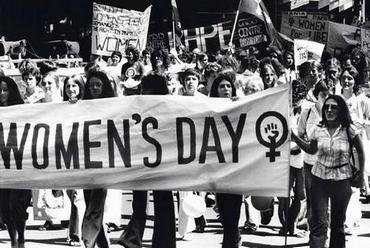
ince 1965 8th of March is an official day off and it continues to be one in post-soviet countries. In 1977 United Nations appealed for all the countries in the world to accept 8th of March as an International day for women’s rights. There was special ritual for it. On this day governments summed up the results of policies connected with women’s rights. But gradually the holiday has lost its political meaning and became kind of a mixture of Mother’s day and St. Valentine’s Day, with such attributes as flowers, gifts, cards and festive dinners.
8th of March traditionally is celebrated widely as it is an official day off and people like to have a city break or just go out somewhere with their friends. Although the actual holiday is on the 8th, celebrations go on for at least 2 days, as people firstly have a celebration at their work place with their colleagues and then with their relatives and friends at home. On the 7th of March most of people have small celebrations at their lunch hours and leave work places earlier.

8th of March is celebrated at almost all offices, schools, universities, factories and so on. In offices men usually gather money to buy every woman of their department a small gift. The gifts are usually the same for every woman, although they vary in colour. Men often buy their colleagues household items like storage boxes sets or home textiles. Some of them are giving gift certificates for make-up stores.
At schools and universities male part of the group or class also collects money to buy girls some small souvenirs. Also there can be a festive concert dedicated to Women’s day. Such concerts are prepared by males and they often consist of good-natured jokes about women’s character, songs about mothers and sisters, poem declarations and theatrical performances. Pupils congratulate their teachers with flowers and candies.
Husbands are buying their wives flowers and gifts, also both males and females congratulate on this day mothers, grandmothers and mothers-in-law with cards, flowers and cute gifts. A lot of people like to spend the 8th of March visiting their friends and having banquets. Shops are crowded by people who are buying food for festivities and gifts and women on streets are carrying flowers.